Wednesday, July 23, 2008

Williams on Augustine on Speaking God


What cannot be said may still be sung. Sung not only in the hymns and psalms of which he is speaking in the Confessions passage, but in the wordless 'jubilus', the almost formless chant of the laborers in the fields:


Singing to God is singing "with jubilation" [in jubilatione]. Now what is this singing with jubilation? Think of people singing as they go about some hot and exhausting job at harvest-time, say, or in the vineyard. They start celebrating in their happiness with the words of familiar songs. But they end up turning away from words and syllables, as if they were filled with so much happiness that they couldn't put it into words. And off they go into the noise of 'jubilation.' This kind of singing [jubilum] is a sound which means that the heart is giving birth to something it cannot speak of. And who better to receive such 'jubilation' that the ineffable God - ineffable, because you cannot talk about him. And if you cannot talk about him, and it is improper just to keep silence, why, what is there left for you to do but 'jubilate' - with your heart rejoicing without words, and the immense breadth of your joy not rationed out in syllables? (en. in Ps. 32.8)


That is one of Augustine's most memorable images of Christian prayer and praise. But more profound and suggestive if another image drawn from music, occurring in the last few pages of the
Discourses of the Psalms, expressing so much of his teaching on grace, desire, purification from the world's ways, and the sheer beauty of truth that it might well serve as a summary of his vision. He is commenting on the words, "Let them sing praises unto him with tabret and harp" (Ps 149.3)

We should not pass over the mysterious meaning of 'tabret and harp' in silence. On a tambourine you have a skin stretched out, and in a stringed instrument you have catgut stretched out. So in both instruments ordinary flesh is being 'crucified.' That man who said, "The world is crucified to me and I to the world" (Gal 6.14) must have sung praises really well on this 'tabret and harp'! And he who loves a 'new song' wants to take you to be that harp, that tabret. He gives you his instructions when he says, "Whoever wants to be my disciple, let him deny himself and take up his cross and follow me." Do not let him throw away his harp and his tabret. Let them be stretched out on wood [of the cross], and all fleshly desire dried out on them. Strings or sinews sound more sharply the more they are stretched out. And what does Paul the apostle say about making his harp sound more sharp and clear? "Forgetting what lies behind and straining forward to what lies ahead, I press on toward the goal for the prize of the upward call" (Phil 3.13-14). So he stretched himself out; Christ touched him, and the sweetness of truth gave tongue. (en. in Ps. 149.8)

- Rowan Williams The Wound of Knowledge, 97-99

Read More...

Saturday, July 19, 2008

Brother Metal, Metal Monk

Has this been spanning the blogosphere yet?

Read More...

Friday, July 18, 2008

Summer Reading?

As the question was embedded in the below post I will ask it outright. What is on your summer reading list? The only thing I would add to the below list is Steinbeck's The Winter of Our Discontent.

Read More...

Thursday, July 17, 2008

When it Rains it Pours

I am on holidays and so I began a fistful of books that have been sitting on my shelf waiting their turn. The three that have emerged this summer are,
Slavoj Zizek, In Defence of Lost Causes
Rowan Williams, The Wound of Knowledge
and my first Jean-Luc Marion, In Excess
I will offer a few excerpts shortly. However, yesterday I was inundated with more books that will have to wait.
I received an order from Amazon which included,
William Cavanuagh's Theolopolitical Imagination and John H. Yoder's The Politics of Jesus (which I read about 10 years ago after which I lent out the copy never to return).
Yesterday I was also out a used bookstore and corralled the following,
Immanuel Kant, Religion Within the Limits of Reason
Max Horkheimer and Theodor Adorno, Dialetic of Enlightenment
Jacques Lacan, Speech and Language in Psychoanalysis
Then to top it all off as I was walking to where I parked my car there was a little Thrift Store that I went into where I perused their bookshelf and for 50 cents I picked up,
Elisabeth Schussler Fiorenza, In Memory of Her
Terry Eagleton, Literary Theory

I need more holidays!

So what summer reading have you picked up?

Zizek's In Defense continues to be an enjoyable read. It is starting to get a little old the way he "turns the tables" on popular conceptions. You have heard it said that Hitler was too violent, well I say to you that he was not violent enough. You have heard it said that Stalinism was immoral, well I say to you that it was too moral . . . and so forth. This however, does not take away from insights into capitalism as the infinitely revolutionary model that can absorb almost all influences. Here is quotes Brian Massumi on the erratic excess of contemporary capitalism saying that,

the more varied, and even erratic, the better. Normalcy starts to lose its hold. The regularities start to loosen. This loosening of normalcy is part of capitalism's dynamic. It's not a simply liberation. It's capitalism's own form of power. It's no longer disciplinary institutional power that defines everything, it's capitalism's power to produce variety - because markets get saturated. Produce variety and you produce a niche market. The oddest of affective tendencies are okay - as long as they pay. . . . It's very troubling and confusing, because it seems to me that there's been a certain kind of convergence between the dynamic of capitalist power and the dynamic of resistance.

Zizek eventually comes to his question and asks, "How, then, are we to revolutionize an order whose very principle is constant self-revolutionizing?" The chapter ends with a quote from Beckett, "Try again. Fail again. Fail better."

Jean-Luc Marion's In Excess is the third in a trilogy of books (which I did not know when I bought it). It is, however, somewhat accessible having not been up to speed with his prior work. Marion asks the question whether the rejection of all transcendence by phenomenology forbids it from engaging constructively with religion. Here Marion looks at metaphysical theology and revealed theology. In as much as metaphysical theology (first philosophy) is based on "real transcendence, causality, substantiality, and actuality" phenomenology could engage in no speculative arguments beyond what is given. However, "for revealed theology, by the very fact that it is based on given facts, which are given positively as figures, appearances, and manifestations (indeed, apparitions, miracles, revelations, and so on), takes places in the natural field of phenomentality and is therefore dependent on the competence of phenomenology. What is surprising here is that phenomenology should disqualify that theology called 'natural' and rational, but it cannot deny further interest in revealed theology, precisely because no revelation would take place without a manner of phenomenality."

The opening chapter of Rowan William's The Wound of Knowledge is worth quoting in full but I will quote one of the final paragraphs after Williams has outlined the paradox and contingent nature of faithful spirituality. He then talks about hope,

The presence of this hope is what makes us alive with 'newness of life' (Rom 6.4) in the sharing of Christ's risen life. Christ's risen life is a life free from the threat of death and annihilation ('Christ's being raised from the dead will never die again' - Rom 6.9), the 'threatenedness' that is part of the human condition of human sin and distance from God. In sharing this life, we share his freedom from 'threatenedness,' it is never - as is perfectly clear in all Paul's epistles - a freedom from exposure to suffering or from fear, but it is a decisive transition to that new level of existence where God is the only ultimate horizon - not death or nothingness. 'From now on, therefore, we regard no one from a human point of view; even though we once regarded Christ from a human point of view, we regard him thus no longer' ( 2 Cor 5.16). The 'human point of view,' for which death is the final horizon, is put away, so that we are free with Christ's freedom. We have, in John's terms, 'passed out of death into life' (1 John 3.14).

Read More...

Monday, July 14, 2008

Married to an Idea

There has been significant energy around the topic of marriage and family over at Faith and Theology and Inhabitatio Dei. Ben has asked pastors and the church broadly to excuse itself from the civil acts of weddings until something more theologically responsible can be engaged. Halden has been more brazen uncovering the idolatry of marriage and family as it typically exists in the evangelical church and particularly in his new favourite nemesis Mark Driscoll.

I fully confess that my life is marked increasingly by something that Halden would liken to idolatry. In the past ten years I have lived and worked in some of the most dangerous and impoverished communities in Canada (yes we have them . . . I could tell stories). A year and half ago I took my first pastoral position at a rural Mennonite church in Ontario. It was with some sense of insecurity that I left the only context I had known as an adult (though as a child I grew up on the farm) and moved to the small town of New Hamburg. Fortunately we first moved into an apartment on Hincks St which we were promptly told was in the ‘rough’ part of town. At least I could still carry some stree cred I thought.
However, this month we moved into a small house in the country that we are renting. It is so peaceful here and our neighbours are so supportive.


I feel some guilt . . . but it is only slight. I am offering increased attention to my wife and our household duties which now includes a garden (and hopefully a pig that we will butcher ourselves). We are also thinking of starting a family. This is all taking greater time and energy that I what used to devote in my urban context.

I am rambling like this because while I appreciate the critiques about family being offered there is always something humorous or perhaps sinister about academics critiquing family as though their commitments to study could somehow be cleansed in the process. To dare use an overused phrase by some the above mentioned bloggers, perhaps evangelicals (and the bloggers who critique them) have not elevated marriage and family enough. While yes there may be none ‘married and given in marriage’ in the Kingdom theologically marriage and family remains one of the most analogously fecund expressions we are given in life (I am of course expanding the notion beyond biological husband and wife). The ‘eviscerating call of the Crucifed and Resurrected One’ (Halden) is always towards marriage (to Christ, to justice, to neighbour . . . yes even to spouse) and not away from it. The form and expression of marriage is of course important but that is what should be at issue.

Our critiques should not be doing away with such possible expressions of faithfulness but adding to them. What I have added in the this move is the opportunity to get my hands dirty in a different way then I did in the urban contexts I lived in. Doing away with the theological expression of marriage is like doing away with the theological expression of land and its relationships. Through our social and economic system we have largely done away with expressions of land. We need to add and fortify this. I was reminded of an old post where I quoted Dostoyevsky having read Crime and Punishment for the first time. Faithful relationship to each other and land is weaved together as symptom and perhaps source of Raskolnikov’s apocalyptic social plague.

Raskolnikov was in hospital during the last weeks of Lent and Easter week. When convalescing, he remembered the dreams he had while running a high temperature and in delirium. He dreamt the whole world was ravaged by an unknown and terrible plague that had spread across Europe from the depths of Asia. All except a few chosen ones were doomed to perish. New kinds of germs – microscopic creatures which lodged in the bodies of men – made their appearance. But these creatures were spirits endowed with reason and will. People who became infected with them at once became mad and violent. But never had people considered themselves as wise and as strong in their pursuit of truth as these plague-ridden people. Never had thought their decisions, their scientific conclusions, and their moral convictions so unshakable or incontestably right. Whole villages, whole towns and peoples became infected and went mad. They were in a state of constant alarm. They did not understand each other. Each of them believed that the truth only resided in him, and was miserable looking at others, and smote his breast, wept, and wrung his hands. They did not know whom to put on trial or how to pass judgment; they could not agree what was good or what was evil. They did not know whom to accuse or whom to acquit. Men killed each other in a kind of senseless fury. They raised whole armies against each other; but these armies, when already on the march, began suddenly to fight amongst themselves, their ranks broke, and the soldiers fell upon one another, bayoneted and stabbed each other, bit and devoured each other. In the cities the tocsin was sounded all day long: they called everyone together, but no one knew who had summoned them or why they had been summoned, and all were in a state of great alarm. The most ordinary trades were abandoned because everyone was propounding his own theories, offering his own solutions, and they could not agree; they gave up tilling the ground. Here and there people gathered in crowds, adopted some decision and vowed not to part, but they immediately started doing something else, something quite different from what they had decided. And they began to accuse each other, fought and killed each other. Fires broke out; famine spread. Wholesale destruction stalked the earth. The pestilence grew and spread farther afield. Only a few people could save themselves in the whole world: those were the pure chosen ones, destined to start a new race of men and a new life, to renew and purify the earth, but no had ever seen these people, no had heard their words or their voices.

Read More...

Sunday, July 06, 2008

Peace in Unpeaceful Places

[Excerpts from this morning's sermon]

God gives the Ten Commandments to Moses on Mt. Sinai which is somewhere in the desert between Egypt and Canaan. The giving of God’s law happens between the place of slavery under foreign power in Egypt and the giving of land and control to the Israelites in Canaan. The place of Mt. Sinai and the giving of the law is not insignificant. God’s law is given outside of the context of any human control or authority. Laws and rules work in our society and with our children because we are somehow able to enforce them through our authority. God’s laws, however, are not given through any institution. Samuel Balentine writes this of the location of Mt. Sinai. “[T]he location of Sinai is finally indeterminate; it lies in the wilderness somewhere between Egypt and Canaan. This elusiveness functions in [the Hebrew] tradition as a symbol of both Yahweh’s freedom and Yahweh’s authority. Like Sinai, Yahweh’s authority is not confined by, indeed may stand in opposition to, the sovereignty claimed by any earthly kingdom.” The authority of God’s law in the Old Testament ultimately lies in the presence of God alone.
. . .
It is God’s presence then that becomes important for understanding the Ten Commandments and how they might lead towards peace. If peace is to be found in God’s presence then it can only be experienced in a place like Sinai, in a place outside boundaries of human power and authority. This is why right after the Ten Commandments and other laws were given we read that God called Moses up to the mountain again were he was given instructions on how to build the Tabernacle. God says, “Make a sanctuary for me, and I will dwell among them.” And in the heart of the Tabernacle was the Holy of Holies where there was an empty space reserved for God. God said, “There, above the cover between the two cherubim that are over the ark of Testimony, I will meet with you and give you all my commands for the Israelites. The Tabernacle functioned as a sort of portable Mt. Sinai. The people of God were always to carry with them a space reserved for God alone; a space that was not influenced or controlled by any individual or group.
. . .
What then does the law have to do with peace? We often assume that following these commands will lead to peace within ourselves and peace with our neighbours. There is an extent to which that is true. But if we look at the structure of this passage something more significant emerges. We find that the people witnessing this event on either end of the Ten Commandments are trembling with fear. As God meets Moses on the mountain the people witness smoke, fire, thunder, lighting and earthquakes. The people are not yet prepared to enter the presence of God and so they roped off at the foot of the mountain. Then after Moses brings the Ten Commandments to the people it says that “when the people saw the thunder and lightening and heard the trumpet and saw the mountain in smoke, they trembled in fear. They stayed at a distance and said to Moses, ‘Speak to us yourself and we will listen. But do not have God speak to us or we will die.’” When God’s commands come to us they shake our foundations. They search out our thoughts and actions sitting in judgment on them. They force us into confrontation with our neighbour as we attempt to throw down the idols within and around us. If they are allowed into us these commands leave us trembling, vulnerable and at the mercy of God. They leave us in the wilderness in the space of Mt. Sinai where no one can claim power and status. According to the text it is then, and only then, as we enter into the commands from either side, the commands to love God and to love our neighbour that we encounter something in the centre.
For those of you who were counting I have left out one commandment. It is at the centre of the commandments. It is at the place where the love of God and love of neighbour meet.

Remember the Sabbath day by keeping it holy. Six days you shall labour and do all your work, but the seventh day is a sabbath to the LORD your God. On it you shall not do any work, neither you, nor your son or daughter, nor your male or female servant, nor your animals, nor any foreigner residing in your towns. For in six days the LORD made the heavens and the earth, the sea, and all that is in them, but he rested on the seventh day. Therefore the LORD blessed the Sabbath day and made it holy.

This the heart of the commandments and the place of peace. This is where God is honoured and neighbour is loved. After the commands have searched us out and we have trembled before them as they overturned our idols and desires then we are able to receive peace from God and peace with all those who gather in this place. This is Sabbath. The place of peace is a place of the worship. We gather each Sunday so that in some real way we can enact and honour Sabbath and this way live at the heart of the commands. This was God’s call on Moses. God called Moses to lead a kingdom of priests and a holy nation; a kingdom not of kings and generals but of saints, a nation not ruled by war and economics but by right relationships with God.
As we leave from here we are called to overthrow the idols of our culture and undermine the national foundations of wealth and power. We leave knowing that as the Tabernacle was a portable place to live with God’s presence now our bodies are the temple of God’s Spirit. Our bodies carry the place where God met with Moses on Mt. Sinai. The Spirit searches us and shakes us until we let go of control and fear and misdirected desires. The Spirit moves in us so that others also might tremble as their idols are exposed. The Spirit empowers us so those who suffer under the powers and idols of the world may find rest. The Spirit carries us so that we might travel to heart of God. This is the place of Sabbath. This is the place of peace where are passions find fulfillment and our fears are healed. May we not be afraid at God’s commands for though they are often not peaceful they are indeed the way to peace.

Read More...

Wednesday, July 02, 2008

Rad Ox Weigh-In

Anyone care to weigh-in on Adam's reflections on Radical Orthodoxy?

Read More...

Hard Times

It looks like the North American economic downturn continues as Starbucks will be closing over 600 locations. We will wait to see if people will be willing to cross over to the other side of the street to enjoy their brew.

GM considers bankruptcy. Would the picture have been any different had they begun 'greening' their vehicles earlier?

Read More...

Friday, June 27, 2008

Junk Mail

I haven't figured out how to set better junk e-mail restrictions on Outlook and so I have to do a lot of deleting every morning. There is a preview pane to see e-mails before you actually open them. Sometimes I smile a little at whatever one-liner is included, mostly I am disturbed at how many ways the penis can be referred to as a love 'weapon'. But this morning I just laughed,

Remember there was one dwarf that Snow White loved the best, the one with the big wang.

Read More...

Friday, June 20, 2008

Little Terror


Zizek quoting Maximlien Robespierre on terror,


If the mainspring of popular government in peacetime is virtue, amid revolution it is at the same time virtue and terror: virtue, without which terror is fatal; terror, without which virtue is impotent. Terror is nothing but prompt, severe, inflexible justice; it is therefore an emanation of virtue. It is less a special principle that a consequence of the general principle of democracy applied to our country's most pressing needs.

I will set aside any qualitative judgments on that passage and consider whether the stick-up boy Omar Little from The Wire comes close to functioning in that role. A stick-up boy is someone who robs the drug dealers. Omar repeatedly talks about living by a code and when a drug dealer tries to pin a murder charge on him in revenge Omar has some credibility when he tells the police officers, "Did you ever know me to do a civilian?" More than this Omar operates with prompt, severe and inflexible actions. Another aspect of the revolutionary space that Zizek promotes is its radical egalitarianism. Omar runs with a tight group in which he himself is gay and includes his lover, women, and his blind "mentor" Butch.
I suspect Omar's mettle comes from a mixture of suffering (indicated by the giant scare across his face) as well as having a moral/spiritual framework from youth (in one scene he is attacked brining his mother to church). I have as yet to understand the 'human' role that would allow a revolutionary event that I understand Badiou or Zizek to advocate to be anything less than the terror that has occurred in the past.

Read More...

Wednesday, June 18, 2008

Not Violent Enough

Zizek takes an entire chapter in In Defense of Lost Causes offering commentary on how we might understand Martin Heidegger's connection to Nazism. Zizek dismisses the characteristic justifications for this. 1) Heidegger was never really a Nazi, he just made superficial compromises in order to save what he could of the autonomy of the university. 2) Heidegger was, for a limited period, a sincerely committed Nazi; however, not only did he withdraw once he became aware of his blunder, but the acquaintance with Nazi power precisely enabled him to gain an insight into the nihilism of modern technology as the deployment of the unconditional will-to-power. 3) Heidegger was a Nazi, and there is nothing to reproach him with for this choice: in the early 1930s, it was a perfectly legitimate and understandable choice.
Zizek subtitles this chapter "Why Heidegger took the right step (albeit in the wrong direction) in 1933. He is interested in showing that Heidegger's association rather than being an anomaly or mistake was actually somehow deeply embedded in his overall thinking.

The association of course is not with the extermination of the Jews but with the possibility of revolution. What is sought through revolution is the creation of space, the suspension of temporality, and the emergence of something new. What becomes the criticism of the Nazism exertion of total power was not that it went too far but that it did not go far enough. What Heidegger hoped to address was the primal conflict in being that sustains the social order. This opens the way for Heidegger's discussion on violence. Zizek offers an extended quote,


Violence is usually seen in terms of the domain in which concurring compromise and mutual assistance set the standard for Dasein, and accordingly all violence is necessarily deemed only a disturbance and an offense. . . . The violent one, the creative on who sets forth into the unsaid, who breaks into the unthought, who compels what has never happened and makes appear what is unseen - this violent one stands at all times in daring. . . . Therefore the violence-doer knows no kindness and conciliation (in the ordinary sense), no appeasement and mollification by success or prestige and by their confirmation. . . . For such a one, disaster is the deepest and broadest Yes to the Overwhelming. . . . Essential de-cision, when it is carried out and when it resists the constantly pressing ensnarement in the everyday and customary, has to use violence. This act of violence, this decided setting out upon the way to the Being of beings, moves humanity out of the hominess of what is most directly nearby and what is usual.

It is this sort of thinking that has liberal critics condemning Heidegger as allowing space for such expressions as Nazism in his thinking. Zizek claims that to level this critique is to confuse the two violences. He writes in his typical style,

What one is tempted to add here is that, in the case of Nazism (and fascism in general), [is that] the constellation of violence is rather the opposite: crazy, tasteless even, as it may sound, the problem with Hitler was that he was not violent enough, that his violence was not 'essential' enough. Nazism was not radical enough, it did not dare to disturb the basic structure of the modern capitalist social space (which is why it had to focus on destroying an invented external enemy, Jews).

The courage that Heidegger sought that he did not find in Nazism was the courage to attack, with violence, the ontological order of being that sustained the social order. For this violence to be in some way transformative then it must someone be able to be turned also on one's self.
I am not entirely sure how I feel about this chapter but what it did raise for me was the question of violence in the Old Testament, particularly the 'Conquest Narratives'. What appears to be necessary for Heidegger and Zizek is the presence of totality in revolutionary movements, complete abandonment and commitment. There is this sort of absoluteness in the God's violent edicts of the Israelites entering the land. Reality consists of symbolic actions under the sovereignty of God. The actions of the Israelites needed to reflect complete trust in God. The sin of the people was not the violence but the half-measures of violence. The violence that still in some way served the people themselves. I am running out of steam and time here but the further question would then of course be how this relates to the question of violence and Jesus. Is there any sense in which Jesus acted as 'violent one' in order to open up the space of transformation?

Read More...

Tuesday, June 17, 2008

Wednesday, June 11, 2008

That Sinking Feeling

In four days I will be preaching on the issue of Canada - First Nations relations. The texts that will be read are Exodus 3:7-15 and Philippians 2:1-11. At this point I feel simply sunk in the conflicting or ambiguous stories and the sheer complexity of it.

Initially I wanted to trace a theme of possession and ownership that still determines the relationship as it functions today but it is of course not simply binary as there is praise and corruption to be found at nearly all levels. It is one thing to sift through documentation dealing with land claims (I will not even wade in here). I have no doubt that First Nations people have legitimate claims here but when documentation is penned by those in authority who are known to have had questionable characters and motives it must be frustrating trying to agree on the "primary sources". I am thinking also of the residential school system which our prime minister will be apologizing for in 10 minutes time. There have clearly been atrocious physical and sexual abuses that have occurred as native children were often forcibly removed from homes so that they would attend these schools. It is also addressed that schools of this sort at that time in history were often the site of abuses (I know our small town school had its abuses). There are others who had a positive experience at residential schools and how they would not be prepared for life without them. In addition there are those speaking from within the native community claiming that they know people who are fabricating the stories of abuse. Growing up near a native reservation I remember all the racist stereotypes of what people from that community did and how they lived. I saw way to many homeless and impoverished native men on Winnipeg's north end main street. I have witnessed beautiful celebrations of native community and spirituality when I was working with an "at-risk" youth. I heard a number of young native people talk about the corruption that occurs within their tribe . . . that you have to be in the right family or know the right people to get more of the government money. I drove through Caledonia the morning one of the land-claim protests became violent.
I am not sure what else I should have expected. This is life. But how is it that I can even begin to speak about this from the pulpit? The Exodus texts speaks of a God who sees, hears and feels a people he calls his own. This God calls an individual as the one who will bring the people into a 'spacious land'. God promises to be with this individual and when this persons asks the name of the one who is sending him God speaking, "I AM WHO I AM." In the Philippians passage Paul pleads with the church to "do nothing out of selfish ambition or vain conceit, but in humility consider others better than yourselves." He then goes on to proclaim our need to have the same attitude as Christ and so follows the great kenotic image of Christ who,
being in very nature God,
did not consider equality with God something to be used to his own advantage;

rather, he made himself nothing
by taking the very nature of a servant,
being made in human likeness.

And being found in appearance as a human being,
he humbled himself
by becoming obedient to death—
even death on a cross

These are both passages about identity. They are identities that are not determined, solid or fixed. The project of European settlement in Canada was one control and possession. Whatever was encountered in the new land was to be determined and fixed under the emerging political power. There are of course varied stories within this project but the overall movement was undeniably one of control. I suppose this is where I will work from. Hopefully from this place of uncontrollable identity we can begin to learn of, ironically, firm and absolute living as it is being taken up with Christ whose name is above all names. A life of absolute contingency and relationship to neighbor and God . . . I still feel sunk.

Read More...

A Nietzschean Call to Worship?

In both Milbank's Theology and Social Theory as well as David B. Hart's The Beauty of the Infinite (though I can't find the reference right now) it is stated that "post-Nietzschean social theory suggests the practical inescapably of worship." Does anyone know who or what stream of thought is being referred to? I don't think either authors offer specific footnotes at that point.

Read More...

Tuesday, June 10, 2008

God Forbid . . .

My mother-in-law was out for a visit recently (no not a set-up for a bad joke) and visiting Chapters she said I should pick out a book. After much soul-searching and gnashing of teeth and I was trying to decide between Taylor's A Secular Age and Zizek's In Defense of Lost Causes. I thought I would wait for the paperback of Taylor's tome (it also seemed a little referency for me) and decided on Zizek. Some of his work is joyfully accessible, namely chapter two's abundant movie critiques. However, all too much of it is still a little over my poorly formed political and psychoanalytical head. I was caught by a section on his critique of democracy, or his critique of the critique of democracy. Zizek views Wendy Brown's work on Nietzsche as all too un-Nietzchean as she reducing him to one who simply nudges us from slumber with no real attempt at changing us towards "a positive liveable project 'beyond democracy.'" He goes on characterize her application of Nietzsche and here I immediately read the word pastors in place of theorists. Fair . . . unfair?


Brown thus accomplishes a domestication of Nietzsche, the transformation of his theory into an exercise in 'inherent transgression': provocations which are not really 'meant seriously,' but aim, through their 'provocative' character, to awaken us from out democratic-dogmatic slumber and thus contribute to the revitalization of democracy itself . . . This is how the establishment likes its 'subversive' theorists: harmless gadflies who sting us and thus awaken us to the inconsistencies and imperfection of our democratic enterprise - God forbid that they might take the project seriously and try to live it . . .

The only change I might make is that in the church we also don't like to get stung. This is all the more acute for me as this Sunday I will be preaching on the relationship between Europeans and Canadian aboriginals . . . throw in the fact that tomorrow our prime minister will be offering some formal apology for our residential school system that sought to 'assimilate' natives into the European construction of Canada.

Read More...

Saturday, June 07, 2008

Ontariwoe

Ontario the have-not province.


Between April, 2006, to April, 2008, Ontario lost 130,000 manufacturing jobs.

Consider Windsor. Its unemployment levels have shown no net growth since the end of 2002, when the Canadian dollar started rising. Over the past five years, building permits have dropped 75% and new-home prices are up only 1.3%, compared with an average rise of 38% in the rest of the country.

Read More...

Friday, June 06, 2008

Things You Would Hear In A Medieval Youth Sunday School Class . . .

A month or two ago I was in our youth Sunday School class and asked us to go around and share the last time we experienced God. This question was perhaps not formed in the most helpful way. Nearly all of us who shared including myself referred to a time when we felt in some way threatened and that the comforting presence of God became apparent to us. This morning as I continued to slowly peck through the new edition of Milbank's Theology and Social Theory I came across his critique of the anthropological claims of religion as that which deals with the lacunae or gaps of life. He writes specifically how experiences of the sacred created appropriate life transitions when ambiguity or confusion arises, how sacrifice restores people to an ordered state when chaos or broken relationships occur, and how theodicy (hmmm theodicy does not show up on my online spell checker) functions to understand suffering and tragedy. Milbank argues that these views marginalize theology as a minor component of social reality and that pre-modern consciousness would have had a much more integrated understanding of God's presence.
All this to say that we offered very modern answers (or that I asked a very modern question) in Sunday School. I wonder what the pre-modern answers would have been?
Why I experience God in the wholeness of my body and the meaning of the words on my lips.
Any other ways a medieval youth Sunday School class would respond?

Read More...

Is There Blood?


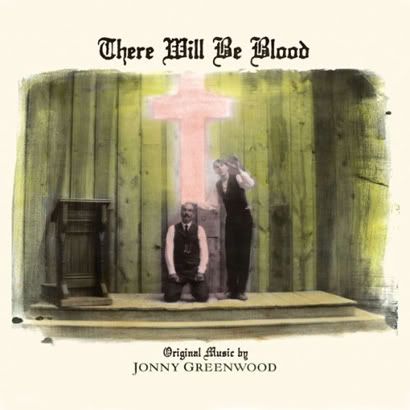
I recently viewed There Will Be Blood and well I know that I don't necessarily need to 'get it' but I didn't. Yes, I witnessed a man isolated and isolating by his compulsions. I noticed the distant aspect of the 'brotherhood,' it was the one venue that offered any hope to Daniel, but in the end they were both false brothers that he killed, was this the modern severing of faith and family?
Any thoughts out there on this movie? I had high hopes and I'm not sure what to make of it.

Read More...

Wednesday, June 04, 2008

Everybody Knows


I wish had more time to blog on this experience but two nights ago I came home to find a message on my answer machine telling me that someone from my church had an extra ticket to see Leonard Cohen that night. Arriving at the theatre my friend kept ushering us closer and closer to the stage until we arrived at our fifth row centre seats. Leonard emerged a frail man of 75 in his black double-breasted suit . . . but his voice. Johnny Cash maintained a certain texture in his voice into his old age but Leonard Cohen's remains full and robust. Early in the concert I needed to overcome a slight dissonance in hearing some of his more critical songs sitting among what was a majority of hipster throw-back yuppies. But after every song I was reminded of the raw depth of his lyrical ability. The dissonance is of course acknowledged by Cohen himself. This was made plain to me as I heard Everybody Knows with new ears. I am coming to recognize that poet does not look for truth nor for change but rather the poet looks for honesty, simple honesty to the fullness or particularity of their experience.

Everybody knows that the dice are loaded
Everybody rolls with their fingers crossed
Everybody knows that the war is over
Everybody knows the good guys lost
Everybody knows the fight was fixed
The poor stay poor, the rich get rich
Thats how it goes
Everybody knows

Everybody knows that the boat is leaking
Everybody knows that the captain lied
Everybody got this broken feeling
Like their father or their dog just died

Everybody talking to their pockets
Everybody wants a box of chocolates
And a long stem rose
Everybody knows

Everybody knows that you love me baby
Everybody knows that you really do
Everybody knows that youve been faithful
Ah give or take a night or two
Everybody knows youve been discreet
But there were so many people you just had to meet
Without your clothes
And everybody knows

Everybody knows, everybody knows
That's how it goes
Everybody knows

Everybody knows, everybody knows
That's how it goes
Everybody knows

And everybody knows that its now or never
Everybody knows that its me or you
And everybody knows that you live forever
Ah when youve done a line or two
Everybody knows the deal is rotten
Old black joes still pickin cotton
For your ribbons and bows
And everybody knows

And everybody knows that the plague is coming
Everybody knows that its moving fast
Everybody knows that the naked man and woman
Are just a shining artifact of the past
Everybody knows the scene is dead
But there's gonna be a meter on your bed
That will disclose
What everybody knows

And everybody knows that you're in trouble
Everybody knows what you've been through
From the bloody cross on top of calvary
To the beach of Malibu
Everybody knows its coming apart
Take one last look at this sacred heart
Before it blows
And everybody knows

Everybody knows, everybody knows
Thats how it goes
Everybody knows

Oh everybody knows, everybody knows
Thats how it goes
Everybody knows

Read More...

Sunday, June 01, 2008

Obama Out Church Shopping

Obama quits his church after months of criticism (NY Times).

Read More...